Step-by-Step Process
Start by lightly dampening the hair to improve control. Use a sectioning comb to divide the hair into clear parts, securing each section with clips. Begin with the front sections, lifting small portions of hair upward and cutting at a downward angle. This technique creates the signature feathered effect of the butterfly cut. Work slowly and check the length frequently to avoid cutting too short.
Once the front layers are complete, move toward the sides and gradually blend them into the back sections. The key is to maintain a smooth transition between different lengths. Avoid creating sharp lines or sudden changes in length. Instead, use small, controlled cuts to blend each section naturally. Continue this process until all sections are connected.
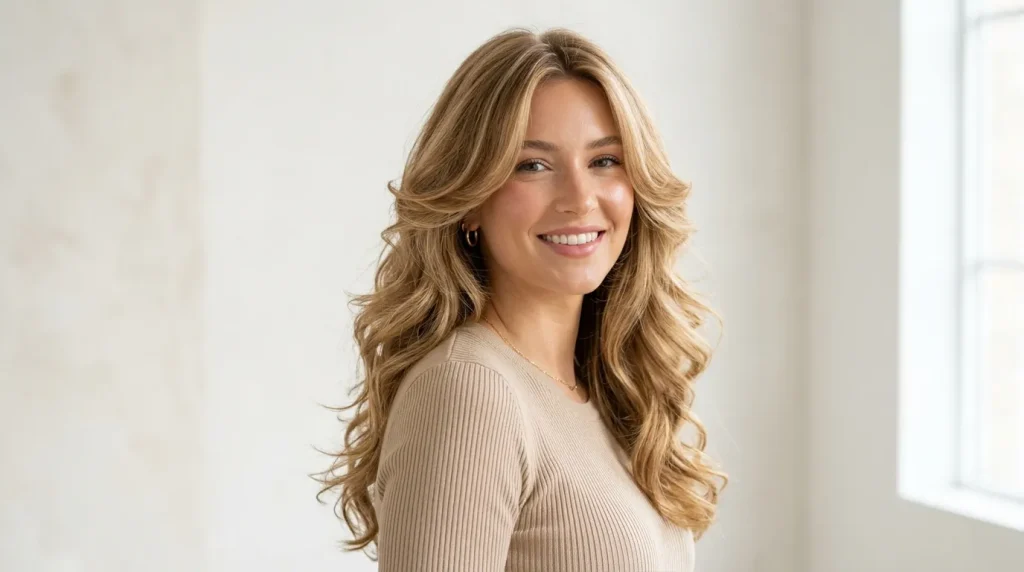
After cutting, comb through the hair to check for balance and symmetry. Make small adjustments where necessary. The final result should show a clear layering pattern that starts shorter at the front and becomes longer toward the back. This creates a flowing shape that enhances movement and volume without removing length.
Idea 2: Face-Framing Butterfly Layers
How to Create
Face-framing butterfly layers focus on shaping the front sections of the hair to highlight facial features. This design emphasizes shorter layers around the face while maintaining longer layers throughout the rest of the hair. The result is a hairstyle that draws attention to the face while still preserving overall length and structure.
These layers are particularly useful for creating softness and balance. The shorter strands help break up the heaviness of long hair and create a natural frame. This technique works well for different face shapes because the layers can be adjusted to suit individual proportions. For example, slightly longer front layers can create a more elongated appearance, while shorter layers can add width.
To create this look, begin by separating the front portion of the hair from the rest. Cut the front layers at a slight angle so they curve naturally around the face. Blend these layers gradually into the longer sections behind them. This ensures a smooth transition and prevents the layers from appearing disconnected.