A minimalist office is more than a workspace with fewer decorations. It is a carefully designed environment that encourages focus, organization, and productivity while maintaining a calm and welcoming atmosphere. Whether you work from home, run a business, study online, or simply need a dedicated area for planning your daily tasks, creating a clean and minimalist office can significantly improve your work experience. Minimalism is not about making a room feel empty or boring. Instead, it emphasizes quality over quantity, allowing every piece of furniture, décor, and accessory to serve a meaningful purpose.
The popularity of minimalist office design has grown because people are discovering that clutter often leads to distraction and unnecessary stress. A clean workspace makes it easier to stay organized, locate important items quickly, and concentrate on the work that matters most. Neutral colors, simple furniture, natural lighting, and carefully selected decorative pieces create a balanced environment that feels professional yet comfortable. The beauty of minimalist design is its flexibility. It works well in large offices, small apartments, spare bedrooms, and even compact desk corners.
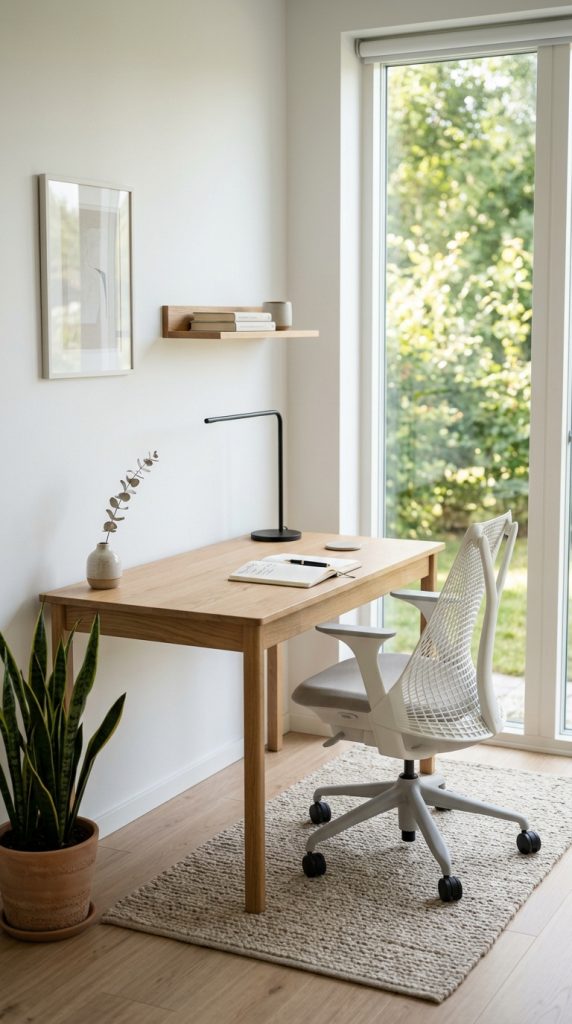
Minimalist office décor also makes cleaning and maintenance much easier. With fewer unnecessary items, dusting, organizing, and rearranging become simple weekly tasks instead of overwhelming projects. A thoughtfully designed office can even improve creativity because your mind is not constantly processing visual clutter. Instead, your attention remains on your goals and daily responsibilities.
Whether you prefer Scandinavian simplicity, modern elegance, Japandi warmth, or contemporary minimalism, there are countless ways to create a workspace that reflects your personality while maintaining a clean appearance. The following ideas will help you design a stylish office that feels organized, functional, and inspiring without becoming overcrowded.
Materials Used
Before decorating your minimalist office, gather a few essential materials:
- Minimalist desk
- Comfortable ergonomic chair
- Neutral-colored paint
- Wooden shelves
- Storage boxes
- Desk organizer
- Cable management clips
- Small indoor plants
- Modern desk lamp
- Floating shelves
- Area rug
- Wall clock
- Minimal artwork
- Notebook organizers
- Wooden trays
- Monitor stand
- Wireless keyboard and mouse
- Neutral curtains or blinds
- Decorative vase
- Simple picture frames
How to Create a Minimalist Office
Creating a minimalist office starts with removing everything that is unnecessary. Empty the room or desk completely and only bring back items that support your work or enhance the overall appearance. Choose furniture with clean lines and avoid oversized pieces that overwhelm the room. Keep the color palette consistent by using whites, creams, light gray, beige, black, or natural wood finishes. Organize office supplies inside drawers or storage boxes rather than leaving them on the desk.
Introduce warmth with natural textures such as wood, linen, cotton, or woven baskets. Select only a few decorative accents, such as a framed print, a ceramic vase, or a small plant. Good lighting is equally important, so maximize natural sunlight whenever possible and complement it with a modern desk lamp. Finally, maintain your minimalist office by returning items to their designated places every day. A few minutes of tidying at the end of each work session will keep the space clean, functional, and visually appealing.
1. Choose a Neutral Color Palette
A neutral color palette forms the foundation of minimalist office décor because it creates a calm and visually balanced environment. Shades such as white, cream, beige, soft gray, taupe, and light wood finishes instantly make a workspace feel larger and brighter. These colors reduce visual distractions while allowing your furniture and carefully selected decorative accents to stand out naturally. Neutral walls also provide flexibility, making it easy to update the office over time without repainting or replacing major furniture pieces.
When selecting colors, aim for consistency throughout the room. Pair white walls with oak furniture, light gray storage cabinets, and soft beige textiles to create a cohesive look. If you enjoy darker accents, incorporate matte black desk accessories, picture frames, or lighting fixtures without overwhelming the overall design. Limiting the color palette helps maintain the clean aesthetic that defines minimalist interiors.
Texture plays an important role when using neutral colors. Combine smooth painted walls with wooden furniture, linen curtains, woven baskets, and ceramic accessories to add warmth and visual interest. This prevents the office from feeling cold or sterile while maintaining simplicity.
Natural light enhances neutral tones beautifully, making the room feel open and inviting throughout the day. If natural lighting is limited, choose warm white LED lighting to preserve the soft atmosphere. Avoid bright, overly saturated colors that compete for attention. Instead, allow subtle contrasts between light and dark neutrals to create depth while keeping the overall appearance clean, peaceful, and highly functional.