Introduction
Bun and ponytail combinations with bangs offer a structured and versatile hairstyle approach that aligns with modern Pinterest ideas focused on both functionality and aesthetic balance. This hairstyle category combines the stability of tied hair with the softness of face-framing bangs, creating a look that is both practical and visually refined. The combination allows flexibility in styling, making it suitable for everyday routines, formal events, and creative projects. This article explains how to create and adapt these hairstyles using clear step by step methods, simple materials, and organized preparation. Readers will learn how to balance volume, placement, and texture to achieve a consistent and polished result. Each hairstyle idea is designed to be beginner friendly while maintaining a structured and professional appearance. The inclusion of bangs enhances facial framing, while buns and ponytails provide control and organization. By following this guide, readers can develop reliable styling techniques that improve efficiency and support a variety of aesthetic preferences within a manageable and repeatable process.
Why This Idea Is Trending or Useful
Bun and ponytail combinations with bangs are considered trending ideas because they combine practicality with adaptable styling options. Pinterest inspiration highlights hairstyles that can transition easily between casual and formal settings, and this combination supports that flexibility. The practical value lies in its ability to keep hair secured while maintaining a soft, styled front through bangs. This reduces daily maintenance challenges and improves overall organization. The DIY appeal makes these hairstyles accessible, allowing individuals to recreate them at home without specialized tools or advanced skills. This supports independence and consistent styling results. Design relevance is also important, as these styles align with modern design preferences that emphasize clean structure paired with soft detailing. The combination of tied hair and bangs creates visual balance, which enhances the overall aesthetic. Accessibility ensures these styles remain beginner friendly, with straightforward techniques that can be practiced and refined over time. This blend of efficiency, versatility, and aesthetic value explains their growing popularity across Pinterest boards focused on beauty, creative ideas, and easy projects.
Materials and Preparation
Preparing for bun and ponytail hairstyles with bangs involves organizing essential tools and understanding the structure of the desired look. Basic materials include a comb, brush, elastic bands, hairpins, and sectioning clips. Additional items such as a light styling cream or spray can help manage texture and maintain hold. Clean hair provides the best foundation, so washing and conditioning beforehand is recommended. Slightly damp or fully dry hair can be used depending on the styling method. Detangling is a necessary step to ensure smooth sectioning and even results. Planning is important, as it helps determine the placement of the bun or ponytail and the shape of the bangs. Consider factors such as face shape, hair density, and the occasion when selecting a style. Sectioning the hair into clear parts improves control during the styling process. Keeping tools organized supports efficiency and reduces interruptions. Practicing the hairstyle beforehand can improve accuracy and speed. This preparation stage ensures a structured workflow and helps achieve a polished and long-lasting finish.
Idea 1: High Bun with Soft Curtain Bangs
How to Create
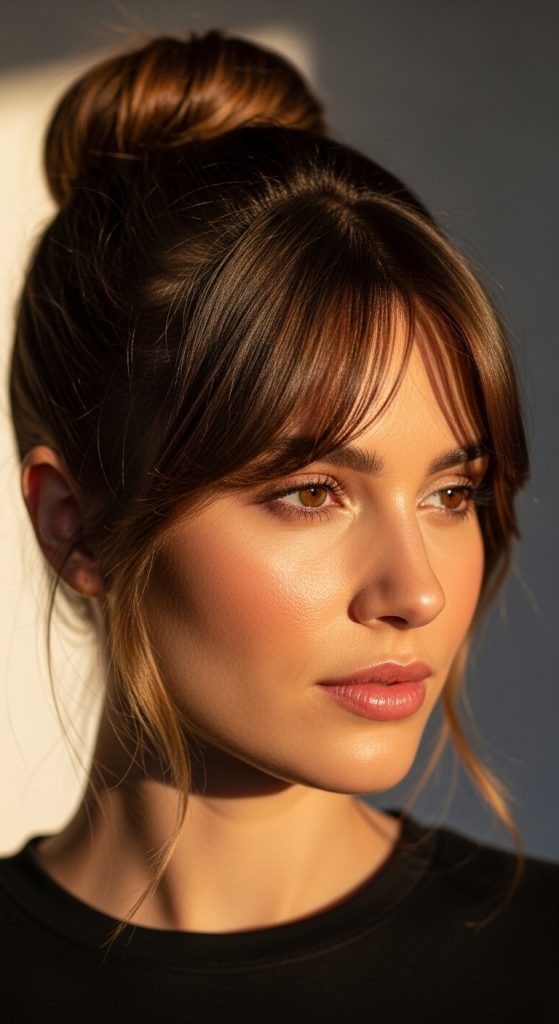
The high bun with soft curtain bangs combines height and softness to create a balanced and structured hairstyle. The bun positioned at the crown adds vertical emphasis, while the curtain bangs frame the face evenly on both sides. This combination aligns with Pinterest ideas that focus on blending structure with natural flow. The high placement of the bun helps elongate the overall silhouette, while the bangs soften the appearance by introducing gentle curves. This style is suitable for both casual and formal settings, making it a versatile option. It remains beginner friendly because it relies on simple techniques that can be repeated consistently. The overall design maintains a clean and organized look while allowing flexibility in texture and finish.